Between Myth and Modernity
Alekos Fassianos and the Legacy of Antiquity
The fascinating tapestry of everyday life in ancient Greece comes alive through the vibrant vase paintings, frescos and reliefs found in museum collections around the world. These artefacts, adorned with intricate black and red figures, tell compelling stories that celebrate the simple yet profound moments of daily existence.
Scenes of preparing and hosting symposiums, engaging in music and dance festivals, competing in sports, and participating in religious ceremonies capture ordinary people at the heart of their experiences, adding rhythm and color to their lives.
Each painting captures a shared, universal narrative, showing how simple, everyday moments shape the human experience.
Alekos Fassianos (1935–2022), a contemporary Greek painter, brought these traditions of ancient Greek art into the rhythms of modern life. His paintings capture the poetry of the everyday, turning simple moments into subtle affirmations of existence.
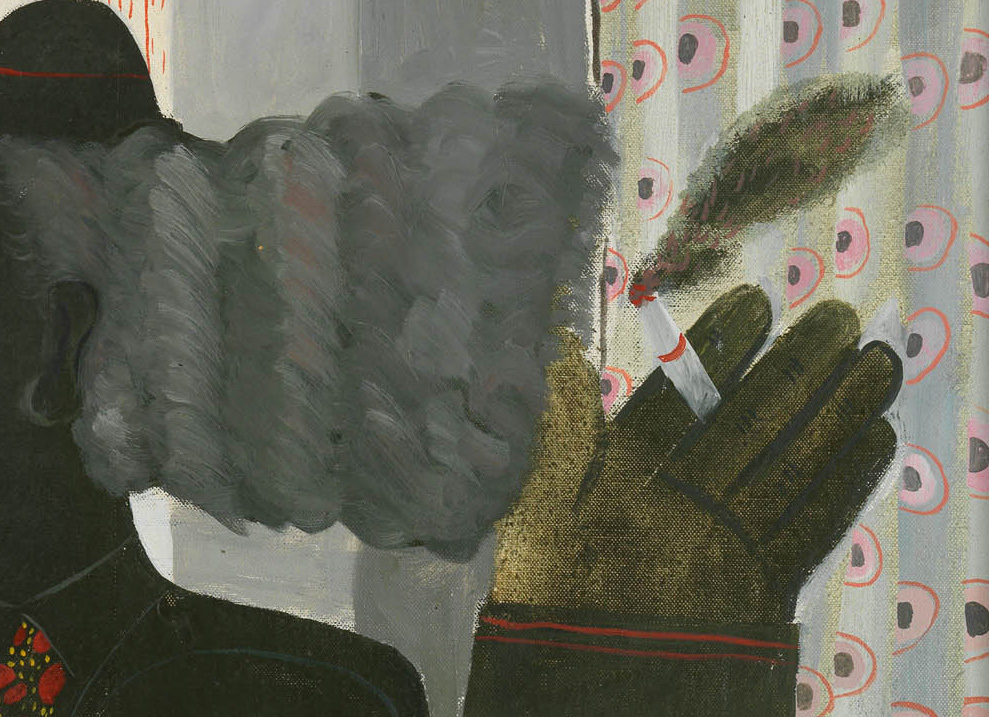
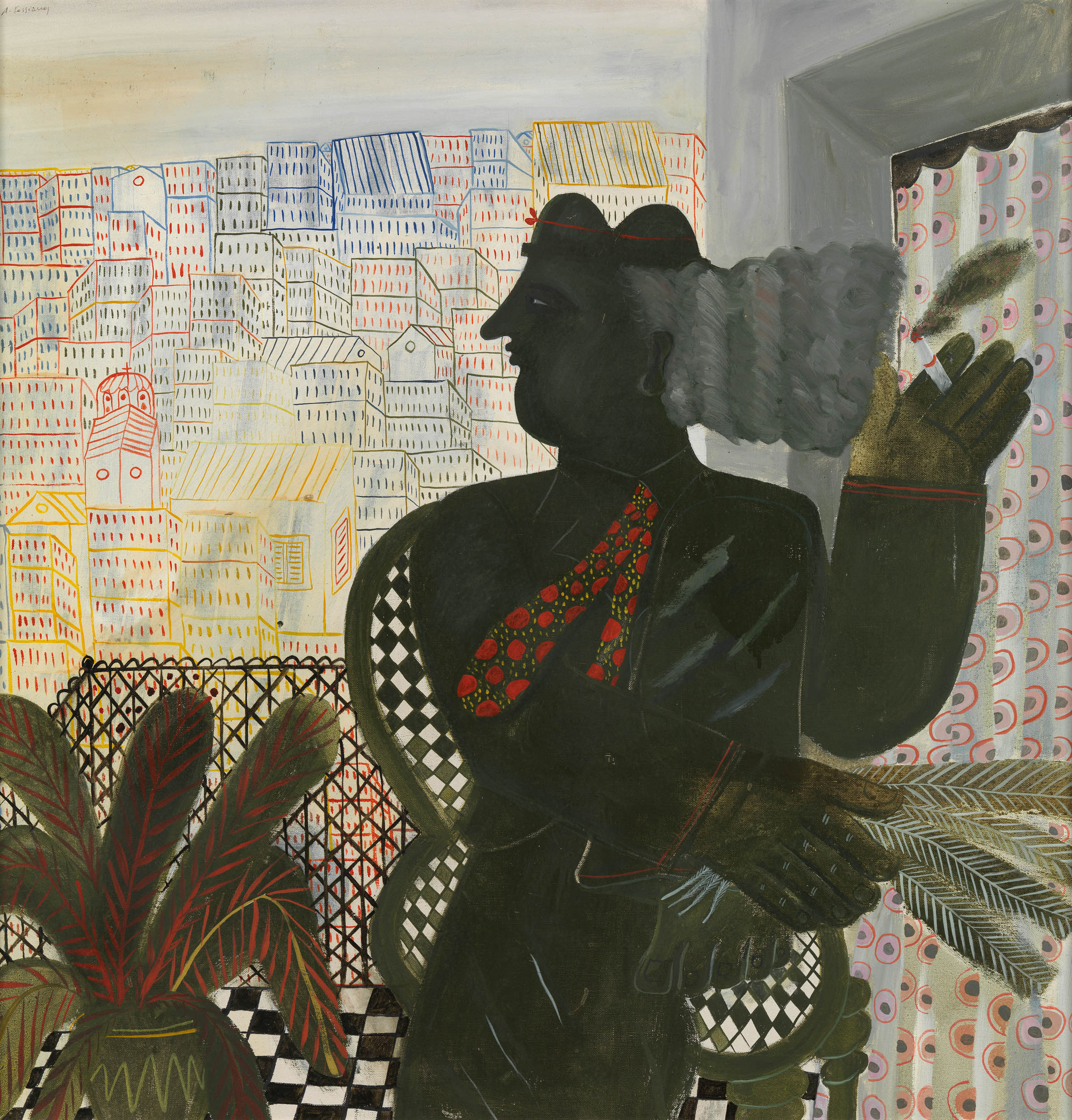
Le Balcon de Kea, 1973, oil on canvas 92 x 89 cm / Photo Credits: Katoufas Brothers
or a cyclist weaving through the streets.
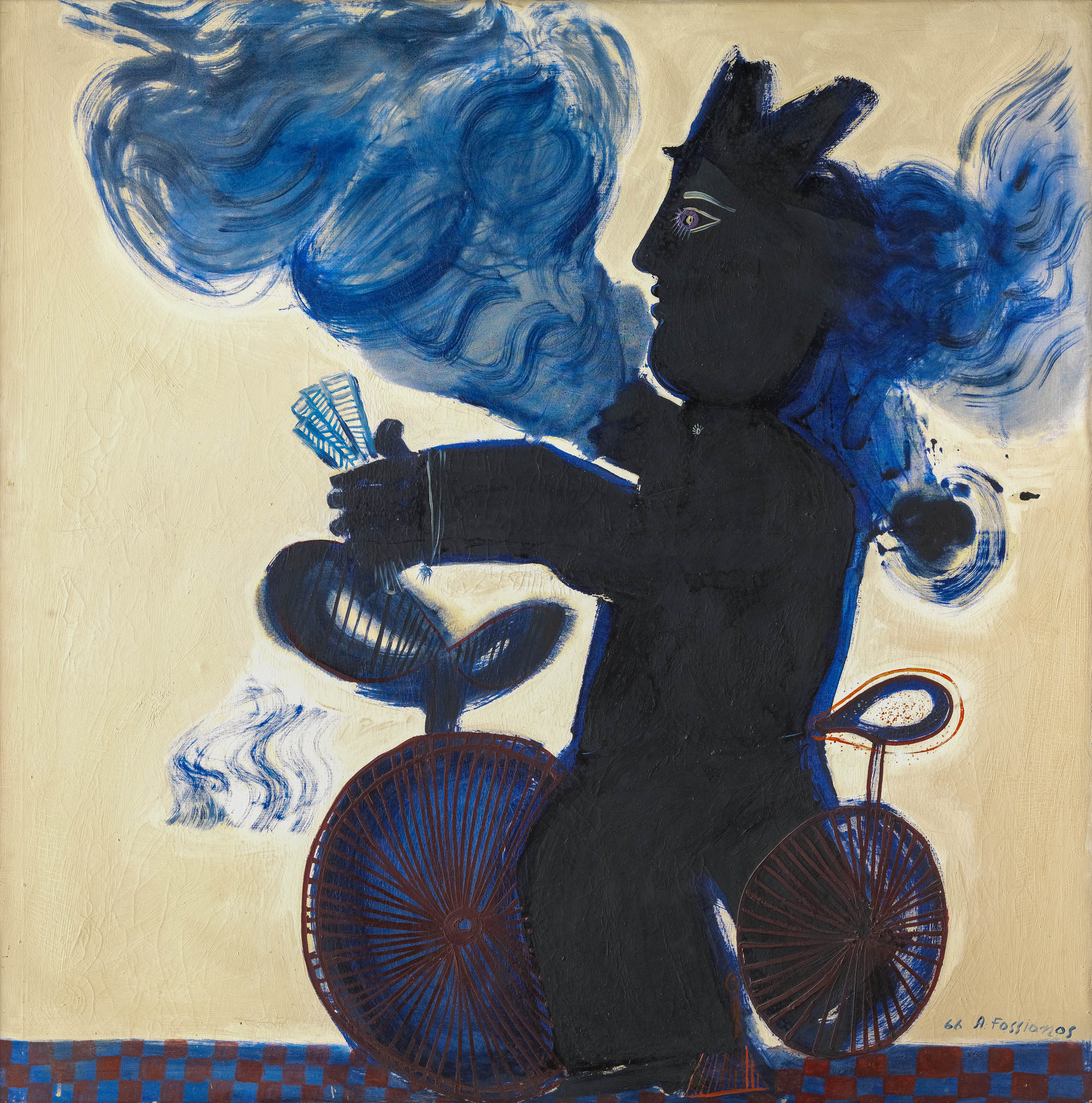
Cyclist, 1966, oil on canvas 150 x 150 cm / Photo Credits: Katoufas Brothers
Fassianos painted during a time of political upheaval and rapid social change in Greece. The decades of the 1960s, 1970s, and 1980s saw military dictatorship, political instability, and growing urbanization. In this shifting landscape, he turned deliberately to the small gestures of daily life. These gestures, seemingly marginal, became affirmations of stability and continuity. His art responded to uncertainty not with grand narratives, but by reaffirming the dignity of the everyday.
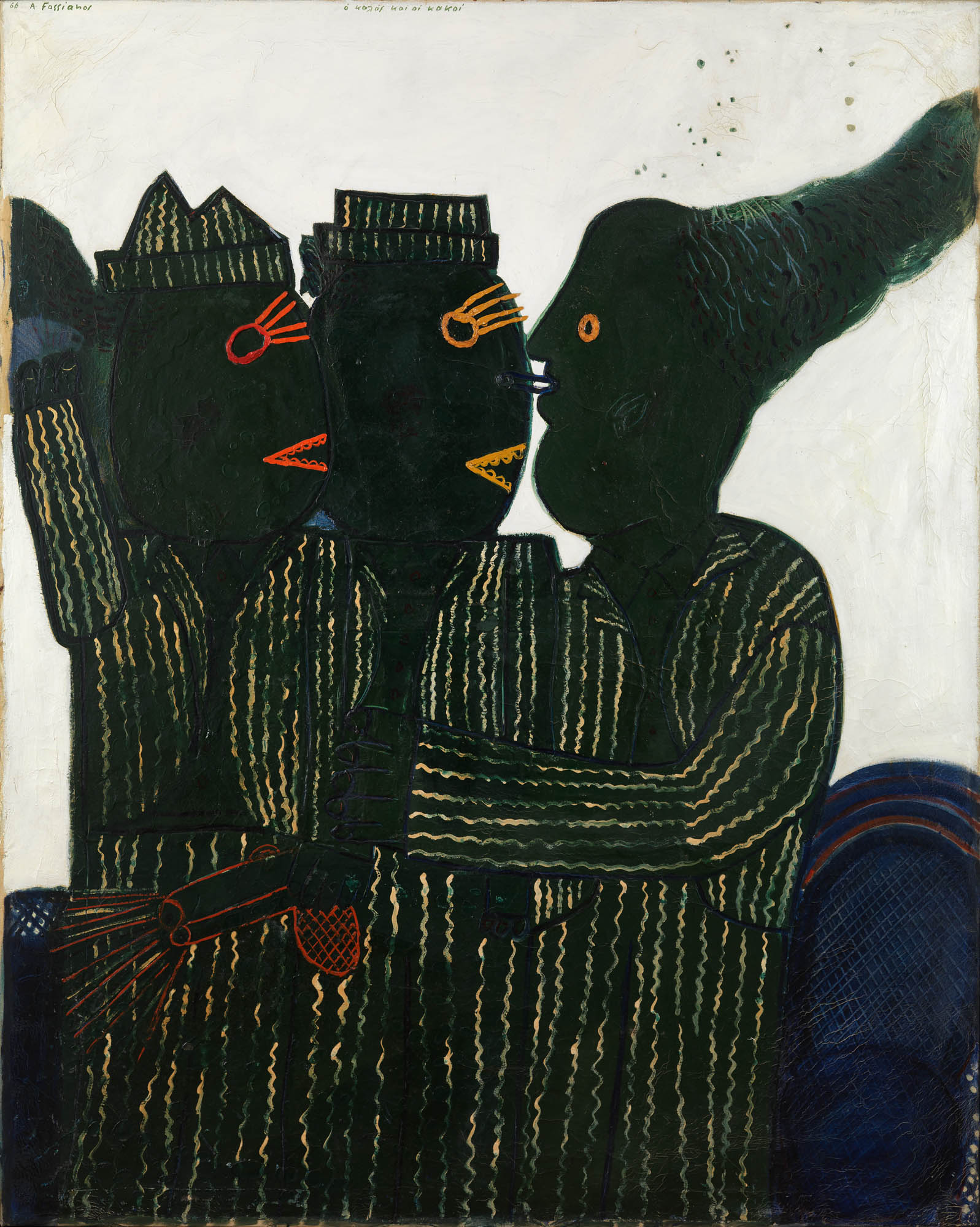
The Bad Guys and the Good Guy, 1966, oil on canvas 150 x 120 cm / Photo Credits: Katoufas Brothers
Rather than pursuing naturalistic representation, Fassianos, like the ancient vase painters, sought a symbolic rendering of reality — a visual language that captured the essence of experience rather than its literal form.
This is where the essential connection lies.
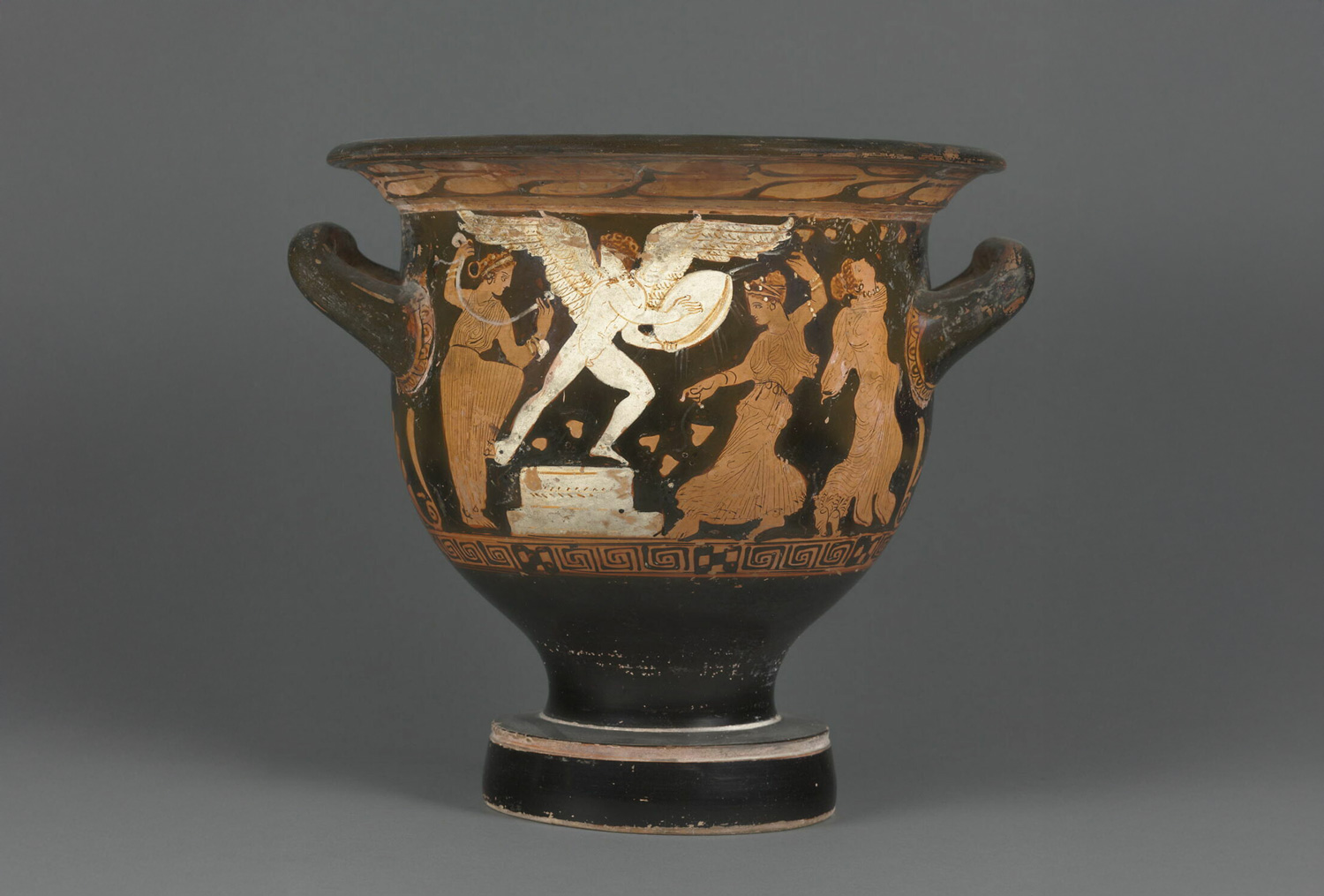
Athenian Crater, 400–375 BC (first quarter of the 4th century BC), Collection Musée du Louvre
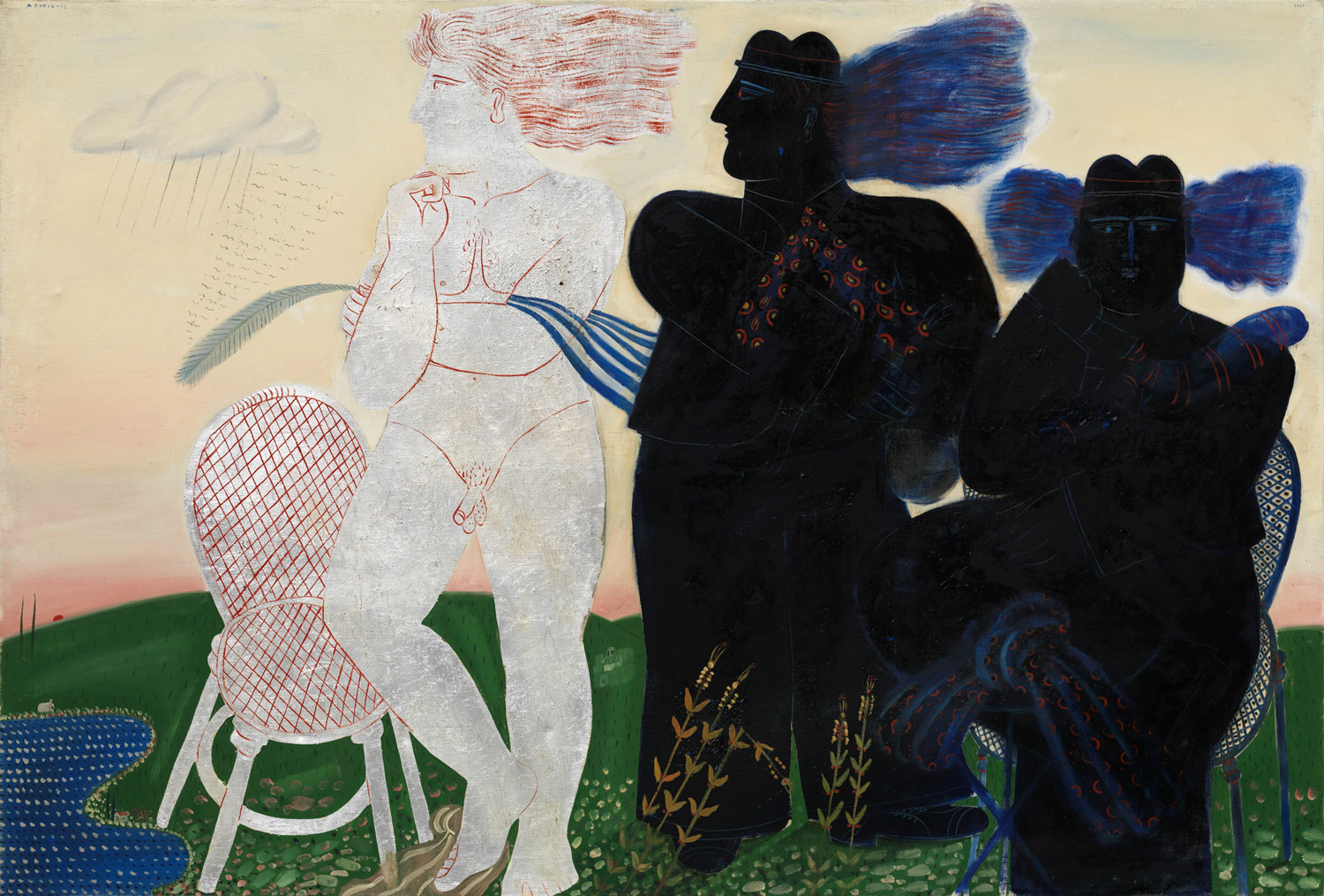
Three Figures, 1977, oil and silver leaf on canvas 172 x 253 cm / Photo Credits: Katoufas Brothers
Ancient Greeks chose to focus on relatable scenes moving beyond heroic legends and mythical adventures, infusing their work with realism and warmth.
Scenes that spoke beyond their moment. Fassianos continued this tradition, portraying the modern citizen as a link between past and present. For him, antiquity was not a distant memory but a living presence. He absorbed it, reimagined it, and carried it into the everyday.
In a world in flux, his paintings returned to what endures: human connection, love and romanticism.
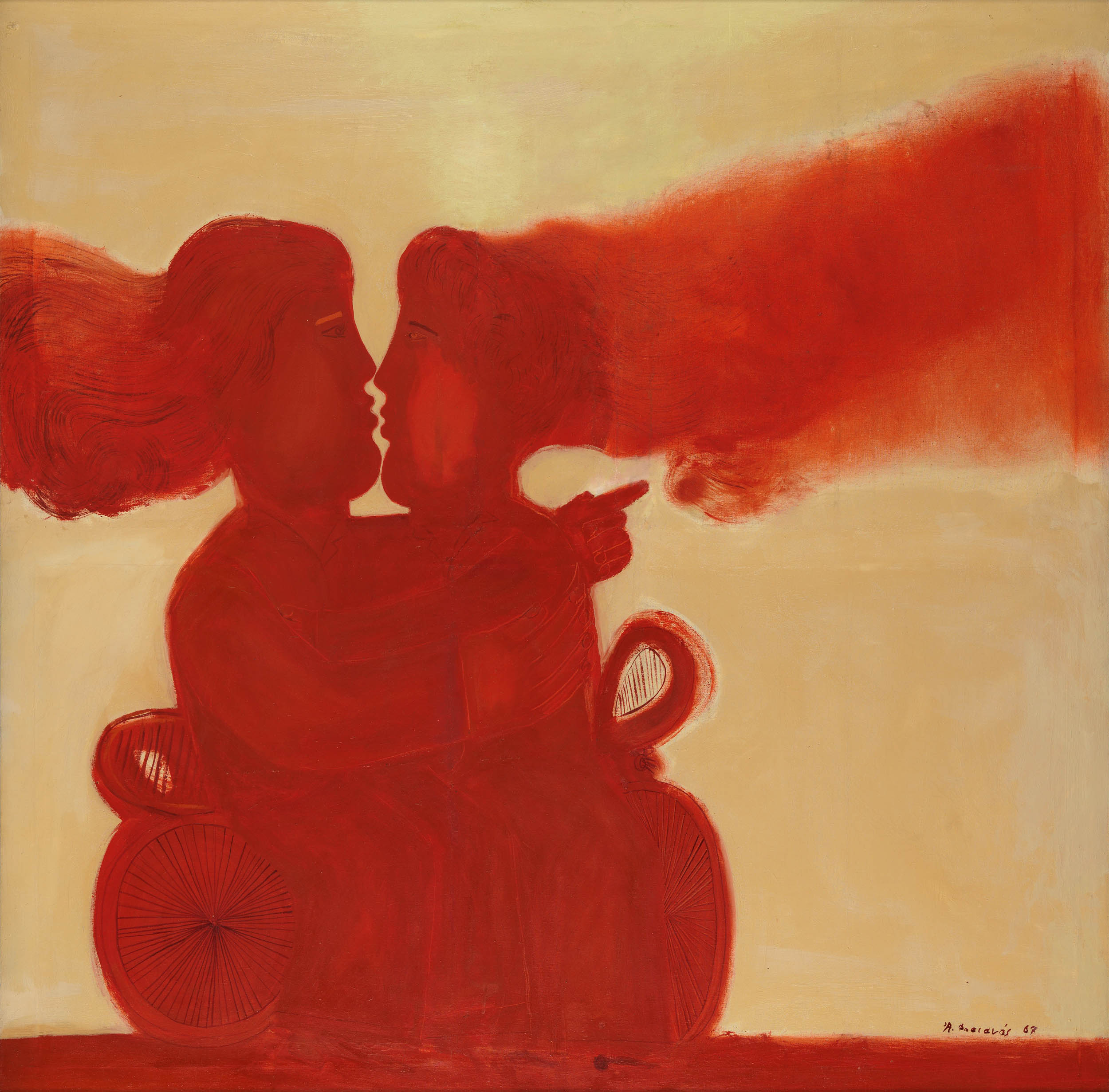
Paris and Helen (of Troy) 1967, oil on canvas 130 x 130 cm / Photo Credits: Katoufas Brothers
His visual language, shaped in the early 1960s, remained consistent across decades. The figure of woman, nature, and the urban environment formed the core of his work.
Deeply rooted in Greek cultural heritage and informed by his studies in graphic arts and engraving, Fassianos built a style of deliberate simplicity.
A narrow, luminous palette — dominated by red, blue, and gold — and fluid outlines gave his figures an iconic clarity.
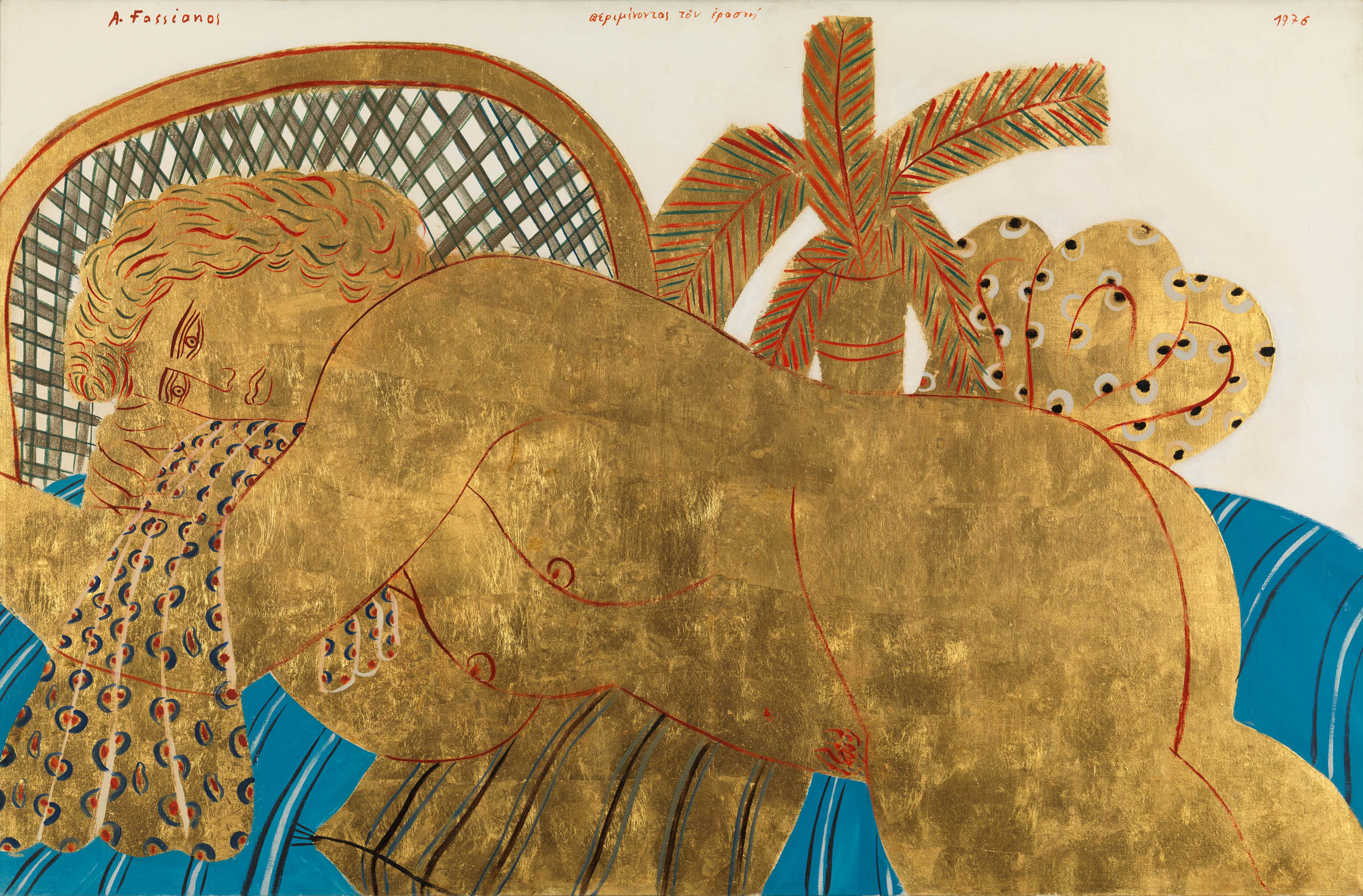
Femme Nue 1978, gold leaf and oil on canvas 65 x 100 cm / Photo Credits: Katoufas Brothers
Where ancient painting relied on structured rhythms and simple narration, he moved toward radical simplification.
Intense, pure colors meet the timeless beauty of the human figure, creating compositions where the past is not imitated but reinterpreted.
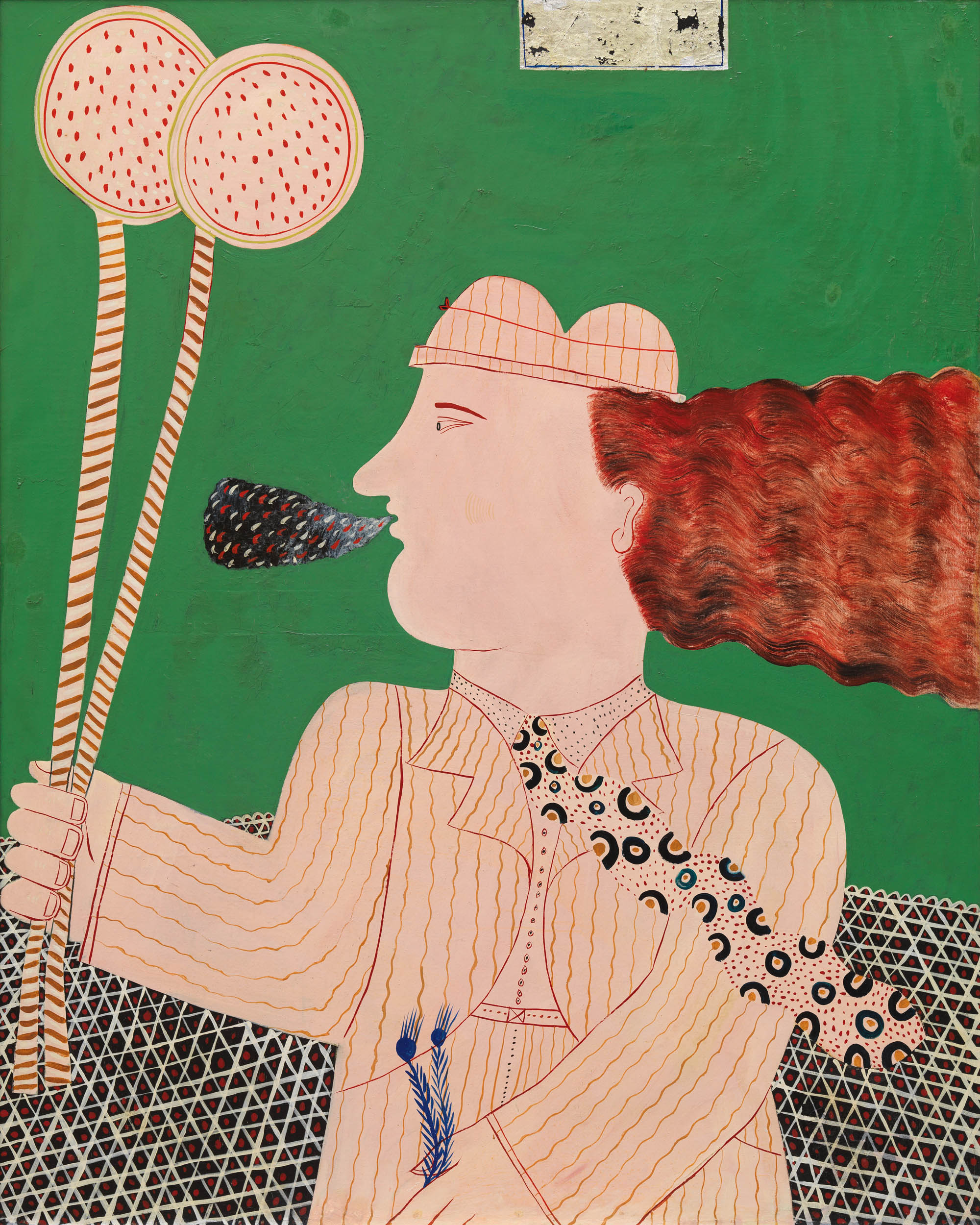
Man Against Green Background 1971, oil on canvas 162 x 130 cm / Photo Credits: Katoufas Brothers
Whether figures grow wings, ride horses, or march across Greek landscapes, they unfold into a living mural of everyday mythology.
His palette, though grounded in the limited but vivid tones of classical frescoes and ceramics, breaks free with poetic freedom, introducing contemporary hues that renew, rather than repeat, tradition.
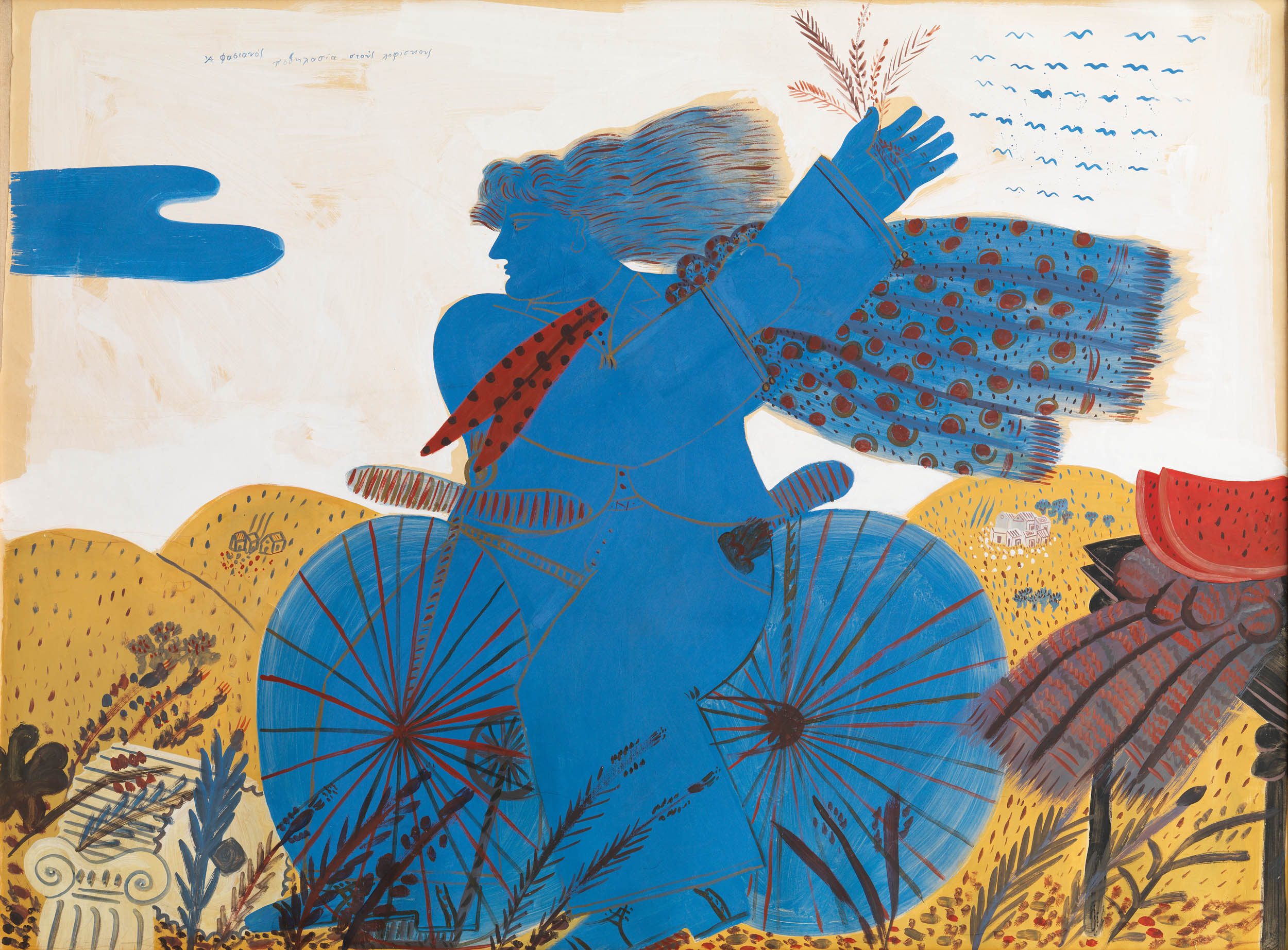
Cyclist 1983, oil on canvas 145 x 200 cm / Photo Credits: Katoufas Brothers
His technique carries deliberate references to antiquity. Like the ancient painters, Fassianos favoured the flatness of composition avoided linear perspective, and emphasized contour and silhouette.
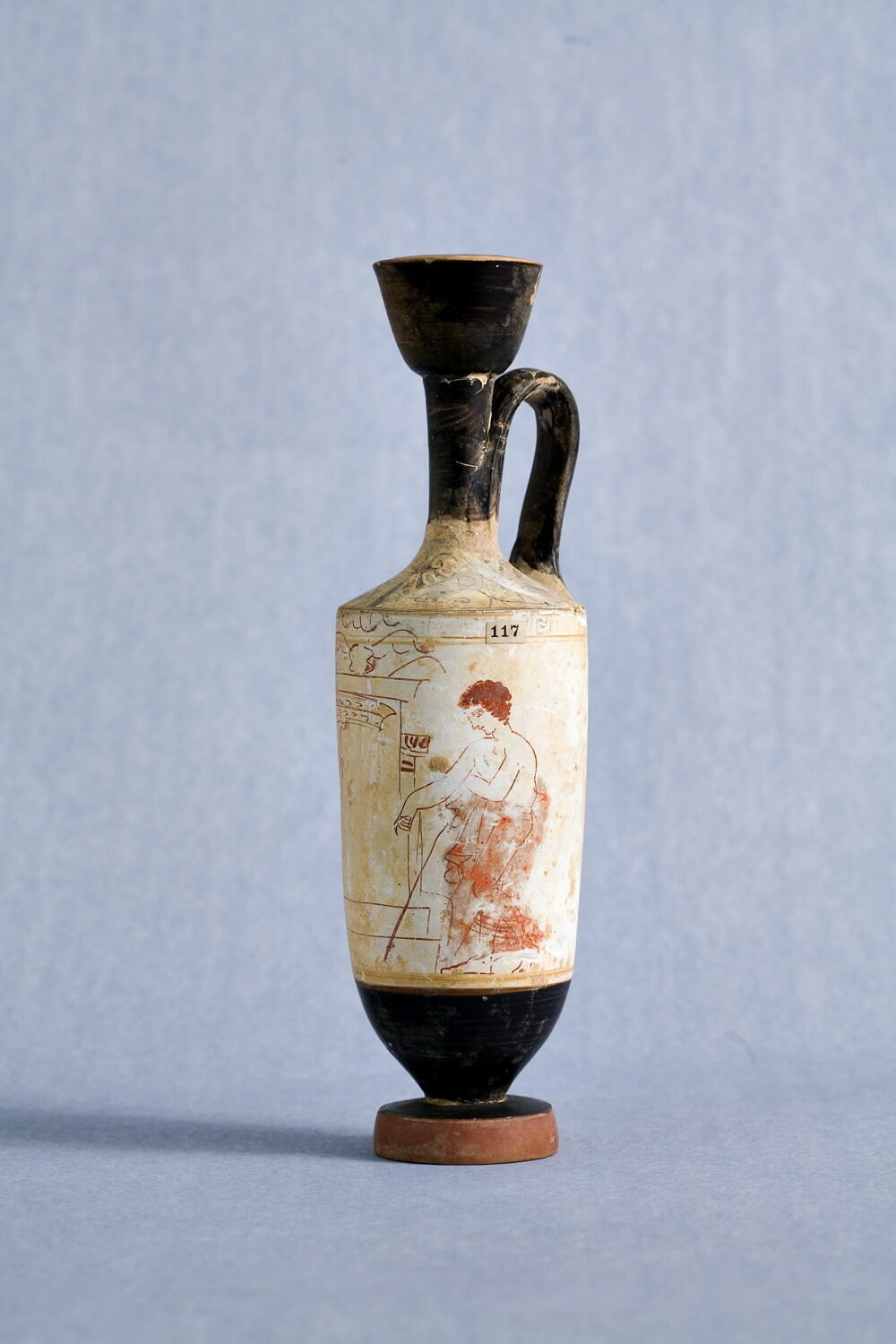
lekythos, around 420 BC, Collection Musée du Louvre
His figures, often seen in profile, reinforce a sense of the archetypal and the eternal.
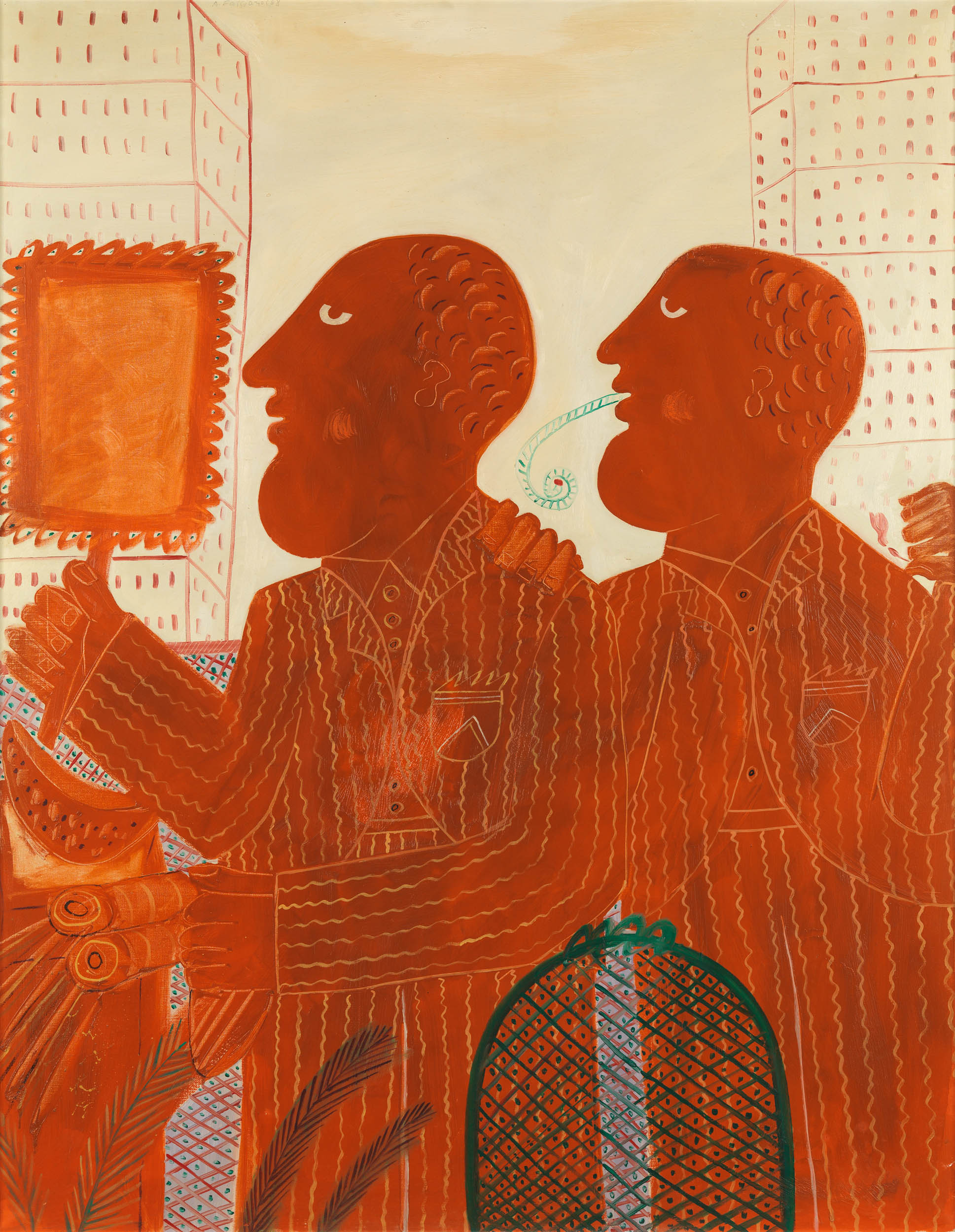
Deux Messieurs Orange 1968, oil on canvas 146 x 114 cm / Photo Credits: Katoufas Brothers
The “art of everyday life” in ancient Greece — where a simple moment became a symbolic scene — finds a powerful echo in the work of Alekos Fassianos.
Daily life becomes a timeless source of inspiration, capable of expressing the values, emotions, and sensibilities of an entire culture.
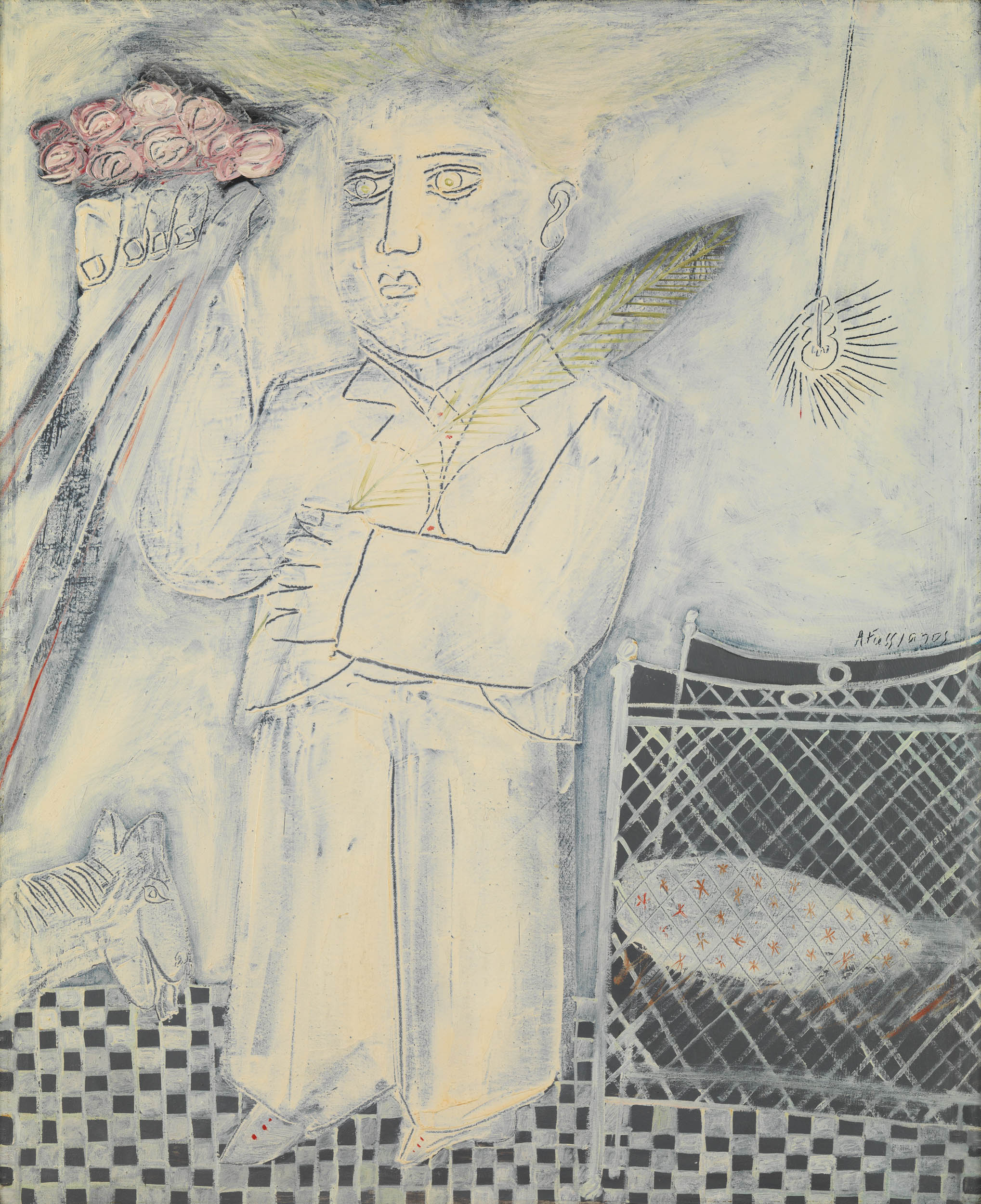
The Wedding 1968, oil on canvas 90 x 70 cm / Photo Credits: Katoufas Brothers
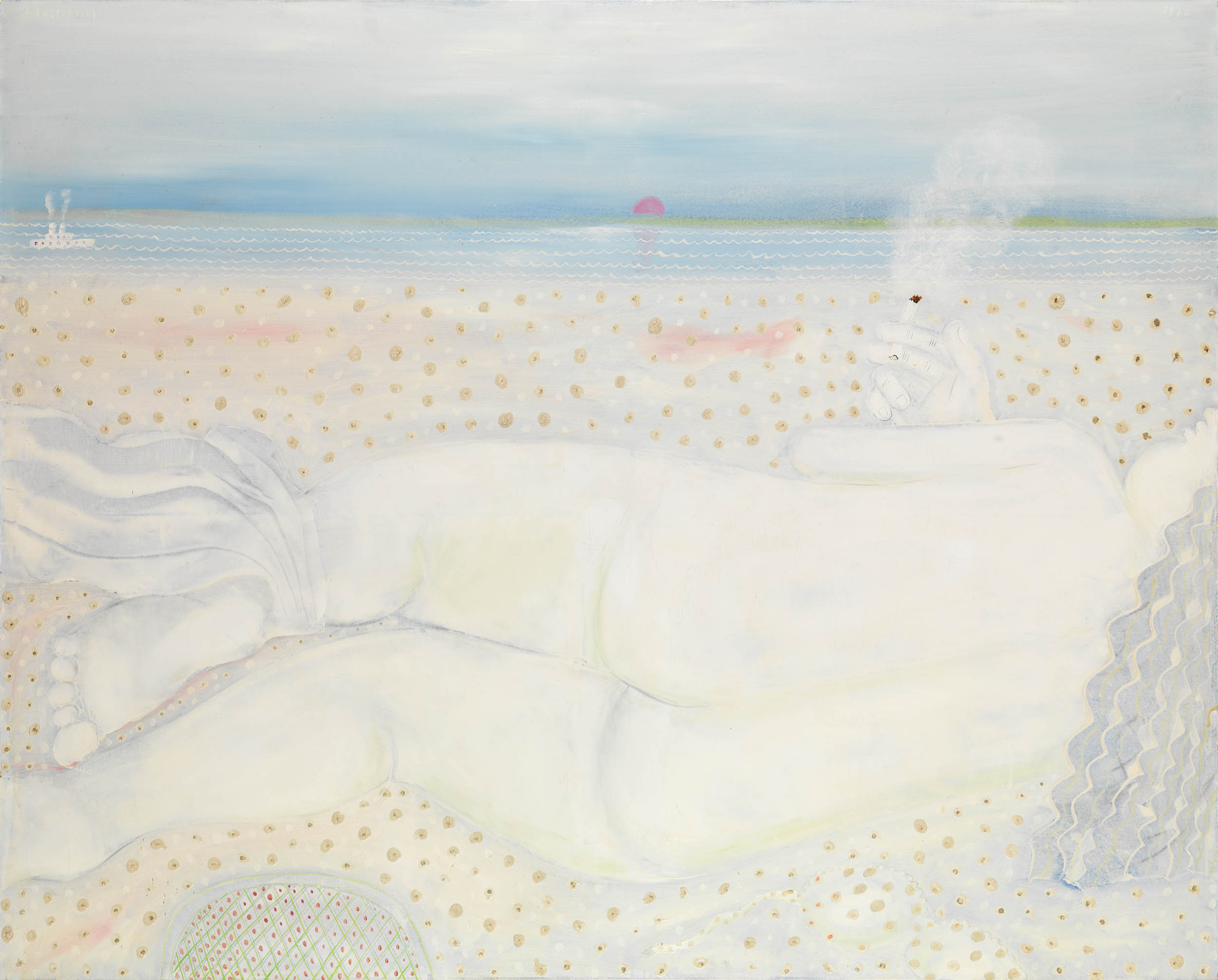
Nu Gris – Paul Facchetti, 1970, oil on canvas 114 x 146 cm. / Photo Credits: Katoufas Brothers
Alekos Fassianos (1935–2022) was a seminal figure in post-war European painting. Trained in painting at the Athens School of Fine Arts under Yannis Moralis, he later studied lithography at the École des Beaux-Arts in Paris.
His early studio in Athens, Greece, shared with fellow artists and architects, was a hub for experimentation and collaboration. Political developments led him to settle permanently in Paris in 1967, where he maintained an international presence.
Fassianos represented Greece at the 1972 Venice Biennale and was the subject of a monographic presentation at the Centre Pompidou in 1983. A major retrospective followed at the Château de Chenonceau in 1985. Over five decades, his work was exhibited in museums and institutions across Tokyo, Zurich, Berlin, Milan, Malmö, and New York.
Beyond painting, Fassianos worked in scenography, book illustration, furniture design, and public art. He designed sets and costumes for the National Theatre of Greece and illustrated editions for poets such as Cavafy, Elytis, and Apollinaire.
His works are held in public collections including the Centre Pompidou, Musée d’Art Moderne de Paris, and the National Gallery of Greece. In 1995, the Alekos Fassianos Museum was established in Athens in collaboration with architect Kyriakos Krokos, a model of urban architectural intervention.
Fassianos was awarded the Commandeur de l’Ordre des Arts et des Lettres by the French Ministry of Culture in 2021.